Women with disabilities: Are they nobody's children?

Swapna Majumdar, CNS Correspondent, India
Maria Cresta Anore at APCRSHR
Maria Cresta Anore cannot hear or speak. But her expressive eyes and animated fingers articulate her enthusiasm. Being at the 9th Asia Pacific Conference for Reproductive and Sexual health and Rights (APCRSHR) in Vietnam is a dream come true for her. It is not just the opportunity to engage with health and gender activists from the region that excites her. As a peer facilitator, Anore is keen to learn more about how to advocate for justice in sexual and reproductive health and rights, especially for women with disabilities back home in Philippines.

[Podcast] World AIDS Day: When TB bacteria and HIV virus can work together, why can't we?


[Webinar] When TB bacteria and HIV virus can work together, why can't we? #WorldAIDSday


Breaking the TB-diabetes nexus for a healthier India

Dr Sophia Thomas, CNS Correspondent, India
Source: World Diabetes Foundation
On the occasion of World Diabetes Day  2017 (November 14), Dr Soumya Swaminathan, WHO Deputy Director General and Director-General of Indian Council of Medical Research (ICMR), called for a standardised approach to tackle non-communicable diseases (NCDs) similar to the Indian government’s Revised National  TB control programme (RNTCP). Interestingly, there is a synergistic linkage between the two diseases which share some common risk factors.

Growing call to translate commitment to action for a TB-free world

Shobha Shukla, CNS (Citizen News Service)
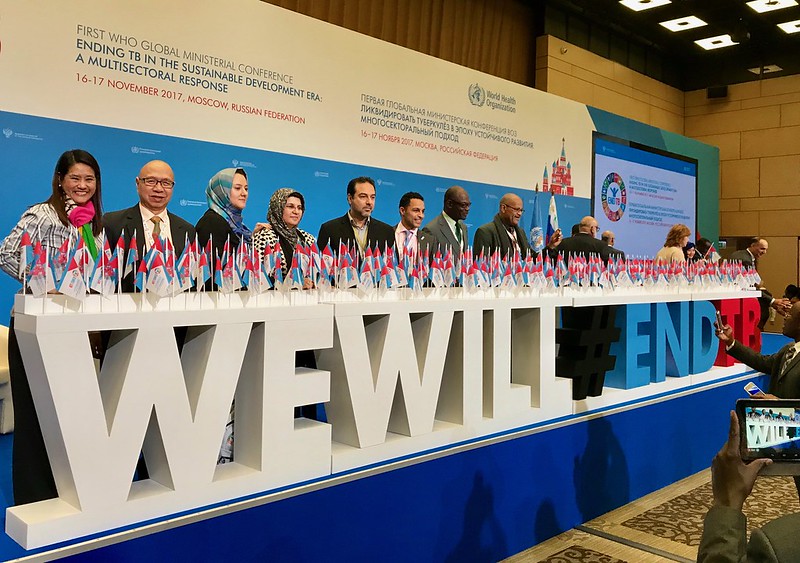
"... Nobody is immune to tuberculosis (TB), including those in the first world countries. More than 20% TB cases are linked to smoking globally. We are aware of our responsibilities and reducing deaths from TB, as well as from CVDs, is one of our country’s priorities. Only with coordinated and concerted action will we be able to defeat TB. I hope this meeting will boost the quality of life and healthcare globally..." so said Vladimir Putin, President of the Russian Federation at the World Health Organization (WHO)'s "Global Ministerial Conference: Ending TB in the sustainable development era: A multi-sectoral response" held in Moscow recently.

When the going gets tough, the tough get going

Shobha Shukla, CNS (Citizen News Service)
"I suffered for 10 long years. and then one fine day I decided I would not tolerate any more violence. I thought to myself that in a few years’ time my son would get married and will have kids. And I would continue getting thrashed in front of my daughter-in-law and grandchildren. No, I would not suffer anymore," so said Lila who comes from a Dalit community  of Azamgarh, Uttar Pradesh, India.

[Call to register] Webinar: When HIV virus and TB bacteria can work together, why can't we?

[Watch webinar recording] [Listen or download audio podcast] In lead up to World AIDS Day 2017, it is important to review that despite strong scientific evidence-backed policies and programmes, we are still failing to avert every TB related death among people living with HIV (PLHIV). TB continues to be the lead killer of PLHIV.

Research is not a luxury but a necessity to end TB

Shobha Shukla, CNS (Citizen News Service)
More than 1000 participants, including the President of Russian Federation Vladimir Putin, ministers from over 75 countries, donors, researchers, civil society representatives, and other stakeholders, had met at the first-ever "WHO Global Ministerial Conference on Ending TB in the Sustainable Development Era: A Multisectoral Response" which was held in Moscow on 16-17 November 2017, to forge stronger inter-sectoral partnerships for accelerating action to end TB.

World Diabetes Day 2017: A special focus on women

Dr Amitava Acharyya, CNS Correspondent, India
Worldwide World Diabetes Day (WDD) is held on the 14th of November. The theme of this year’s World Diabetes Day campaign is ‘Women and diabetes - our right to a healthy future’. This theme is aimed at increasing awareness around diabetes in women at risk of or living with diabetes around the world.

Breaking the shackles of patriarchy

Shobha Shukla, CNS (Citizen News Service)
“Men always suppress women. It is for women to think that if they want to live their lives they have to be strong enough and step out of their homes. They should not be scared of ‘what society would say!’. If we are in the right, we do not have to be afraid of anyone. There is no shame in raising your voice against injustice, no matter what others say. Keep your spirits high.”

Latent TB deserves more attention

Dr Amitava Acharyya, CNS Correspondent, India
Tuberculosis (TB) remains a major infectious disease globally. After initial contact with viable TB bacilli, hosts who fail to clear all Mycobacterium TB (M.TB) can progress to the status of latent TB infection (LTBI) and have a life-time risk of 5%–15% to further progress into active disease.

Applied health research for making systems work for all is vital to #endTB

Shobha Shukla, CNS (Citizen News Service)
[Watch video interview] [Listen/ download podcast] "Excellence in health means devoting your life to ending poverty" said physician and comedian Patch Adams many years ago, but these words have gained even more relevance in the current context and development paradigm.

Time to manage diabetes and latent TB

Roger Paul Kamugasha, CNS Correspondent, Uganda
Research has proved that people with diabetes are at high risk of developing active TB disease. This calls for global attention to focus on specific action in order to shift the paradigm of the escalating TB-diabetes burden. These actions should focus on earmarking resources for investment into research, advocacy communication and social mobilization.

Link between diabetes and TB

Dr P S Sarma, CNS Correspondent, India
Diabetes Mellitus (DM) is one disease that can have an adverse affect on many organs of the body. Like wise, it has a great impact on all forms of TB—whether latent or active . People with DM have a high risk of getting TB, more so if they are having  poor diabetes control. Diabetes prevalence is increasing especially is low income settings where TB is already endemic.

Domestic violence failed to bring her to her knees, it brought her to her feet

Shobha Shukla, CNS (Citizen News Service)
"I blame the administration and parents for most cases of gender violence in our society- administration, because there are hardly any schools for girls in remote areas; and parents because they marry off their daughters at a very young age. So girls like me are not only deprived of education but also have no opportunities to work. This, coupled with an early marriage, leaves them helpless in the face of injustices meted to them by a patriarchal society". Words of wisdom indeed from Gayatri Devi, who could study only till Class 5 as there was no girls' school in her village, located in a forest area.

Driving out stigma will make it easier for people to talk and heal

Despite growing attention to range of multi-faceted stigma related to HIV and TB, it still not only jeopardizes lives of affected communities but also blocks access to care. At the recently convened 48th Union World Conference on Lung Health in Guadalajara, Mexico, CNS (Citizen News Service) spoke with few leaders from affected communities to listen to their insights on how to improve TB and HIV care as well as address stigma.

Linked? Mental health, palliative care and treatment of drug-resistant TB

Diverse range of mental health needs need proper attention and care from healthcare providers if are to improve treatment outcomes for people with drug resistant forms of TB or people living with HIV (PLHIV). When treatments span over years or lifetime, and drugs used can be very toxic and may have serious side effects, mental health needs become even more acute. But despite guidelines for palliative care for patients with drug-resistant TB, we are not ‘walking the talk’ on the ground.

TB, HIV and diabetes: Voices from the field

Scientific evidence, policy and programmatic linkages between TB and HIV as well as TB and diabetes (and HIV and NCDs) have been getting more attention in recent years, but still lot more synergy between different 'silos' is warranted for optimal public health outcomes. At the 48th Union World Conference on Lung Health, several experts from range of countries presented their studies looking at these connections between diseases. If governments are to deliver on the promises of the Sustainable Development Goals (SDGs) integrated responses from grounds up are indeed an imperative!

Back to basics to #endTB: Do it right the first time, every time!

[Watch video interview] [Listen to podcast] Are we losing grip on the evidence-based basic principles that were in the core of fighting tuberculosis? Challenges like drug resistance which are posing a threat to global health security warrant a review. Also, the #endTB dream will continue to remain a mirage if we fail to address social influencers that increase TB risk for a large majority of our populations, severely impacting the most disadvantaged. These were some of the insights shared by Dr Anne Fanning, who has dedicatedly worked for fighting infectious diseases especially TB, and was instrumental in bringing issues of less heard populations such as indigenous peoples to the fore.

[Podcast] Linked: Diabetes and latent TB, active TB disease, MDR-TB, tobacco smoking!


[Webinar] Diabetes and latent TB, active TB disease, MDR-TB, tobacco smoking


Gender equity is must for tackling TB

Shobha Shukla, CNS (Citizen News Service)
According to the WHO Global TB Report 2016, of the 10.4 million new TB cases in 2015, 5.9 million were men (56%), 3.5 million were women (34%) and 1.0 million were children (10%). The global male:female ratio was 1.6:1. Also there were 1.77 million deaths in 2015 due to TB: 1.06 million (59%) were men, 0.50 million (28%) were women and 0.21 million (13%) were children. While the TB bacteria might not differentiate between its male and female preys, men and women do face different risk factors for TB and different barriers to successful TB diagnosis and treatment.

Urban #TB hotspots cannot be on blindspot, if we are to #endTB!

Our governments have committed to achieve the 17 Sustainable Development Goals (SDGs) by 2030 but without concerted action, the promises will barely remain a mirage. For instance, unless social influencers of tuberculosis (TB) get due attention from all different sectors that have a role to play, we cannot end TB. Also with rapid urbanization, we need to address TB in the context of urban planning and development, that is rapidly and aggressively taking place globally. Although burden of TB varies across countries, but one trend is undeniably too common to miss: the alarming manner in which TB is concentrated in vulnerable populations not just in least developed and developing nations but also in the developed world.

Can we reach the tipping point for childhood TB?

Shobha Shukla, CNS (Citizen News Service)
An estimated 1 million annual cases of children with TB (although the actual number could be much higher); 210,000 annual deaths from childhood TB - a mortality rate of 21%! More shockingly, 96% of these deaths occur in children who do not receive any TB treatment. A treatable and preventable disease that is not being treated, and certainly not being prevented. A scary situation indeed!

[Call to register] Webinar: What's the link? Diabetes, latent TB, active TB disease and MDR-TB

[Watch webinar recording] [Listen/ download audio podcast] One of the important highlights at the 48th Union World Conference on Lung Health was the study that probed if diabetes affects latent (or dormant) TB infection. In lead up to 2017 World Diabetes Day, key experts will share more on the linkages between diabetes and latent TB, active TB disease and drug resistant TB (as well as tobacco use).

Fighting to death to defeat death

Shobha Shukla, CNS (Citizen News Service)
Phumeza Tisile, South Africa
"One morning when I woke up in the hospital, it was not just another day. It was a day of numbing silence. I could not hear anything. I switched on the TV, but there was no sound. In a confused state, I went to the nurse. I could see that her lips were moving but I was not able to hear what she was saying. She wrote down on a piece of paper that I had become DEAF. It was so very sudden. Till the previous day, I was okay-listening to music, hearing the laughter of others, and the next day it was all so quiet. I was shocked and frustrated, especially when they told me that my hearing loss was not reversible - it was permanent.”

[Podcast] Stamping out TB stigma is vital to accelerate progress towards ending TB


[Focus] Driving out TB stigma is an imperative to #endTB


Will new tools spur progress to #endTB?

Shobha Shukla, CNS (Citizen News Service)
The immortal words of Edison, "If there is a way to do it better, find it!" flash in mind when we see low rates of TB decline - which are currently a fraction of what is required to end TB by 2030. Will new TB diagnostics, drugs and vaccines propel us towards the #endTB targets? The WHO End TB Strategy, aims to end the global TB epidemic by 2035.