[podcast] Are we on track to end AIDS in India?

Listen to this Podcast from the 13th National Conference of AIDS Society of India (13th ASICON), Hyderabad, India, held during 3-5 April 2022 on the theme of “Confronting Pandemics with Proficiency, Precision and Persistence.” Experts include UK's HIV expert Dr Jyoti Dhar, ASICON President Dr Ishwar Gilada, ASICON Co-Chair Dr Dilip Mathai, ASICON Scientific Co-Chairs Dr Naval Chandra and Dr Vijay Yeldandi.

Listen to this podcast on Apple Podcasts, Amazon Music, Google Podcasts, Spotify, Stitcher, TuneIn, aCast, Podtail, BluBrry, Himalaya, ListenNotes, American Podcasts, CastBox FM, Ivy FM, and other podcast streaming platforms.

We can #endAIDS now if "undetectable equals untransmittable" becomes a reality for all persons living with HIV

[हिंदी] If every person living with HIV is aware of the positive status, receiving lifesaving and effective antiretroviral therapy, and remains virally suppressed, then not only virus becomes undetectable but also untransmittable (U Equals U). Not only this will ensure optimal quality of life for every person living with HIV but also will help translate the promise of our governments to end AIDS by 2030. We can end AIDS now, said Dr Jyoti Dhar, senior HIV expert from UK, who was speaking at the opening of 13th National Conference of AIDS Society of India (13th ASICON) in Hyderabad.

Are we ready to give it all to #endTB?

[हिंदी] First-ever United Nations High Level Meeting to end TB by 2030 was held four years ago. It culminated in an important political declaration that galvanised accelerated action towards eliminating TB by 2030. With less than a year to deliver on intermediary 2022 promises, progress has been there but dismal. More importantly, latest Global Tuberculosis (TB) Report of the World Health Organization (WHO) shows that COVID-19 gave a major jolt to the efforts to fight the ancient disease forcing to reverse gains that were made in the past decade. 

Preventing disease and strengthening health system are key while we open up economies

[हिंदी] Although some parts of the world are reporting another rise in new COVID-19 infections, many countries are doing away with pandemic-related public health and social measures that were put in place over two years ago. Experts of Organized Medicine Academic Guild of India (OMAG) raised an alarm and called for layered safeguards with "One World One Health" approach while we rebuild a more equitable social and economic order for everyone.

Will Himalayan Indian state eliminate tuberculosis by 2023?

Two years before the pandemic had struck us, the hilly state of Himachal Pradesh in India had declared that it will eliminate tuberculosis (TB) by 2023 - two years before the national #endTB target (2025), and seven years before the global #endTB target (2030). State Chief Minister’s dedicated initiative had further galvanized the efforts towards containing the ancient disease. But are we on track?

Treatment of the world's oldest epidemic: the past, present and future

This article is dedicated to all those who lost their lives to world's most deadly infectious disease - TB - and to those who defeated it
Is it not shocking that an ancient disease that has been with human since long before the recorded history, and is preventable and treatable, still kills around 1.5 million people every year? Molecular analysis of causative microbe of tuberculosis (TB) suggests that the first infections of humans occurred as much as 70,000 years ago. But the actual cause of TB was known only 140 years ago, when on March 24, 1882, Dr Robert Koch announced his discovery of Mycobacterium - the microbe that causes TB. Even today, TB remains the leading infectious cause of death globally. 1.8 billion people (nearly 25% of the world’s population), harbour Mycobacterium tuberculosis. Every year nearly 10 million people contract the disease and around 1.5 million die from it.

No #HealthForAll without peace: Attack on healthcare facilities is war crime, must stop

[हिंदी] Slogans like 'every life matters' sound so clichéd and hollow when we see the ground reality in the ongoing Ukraine-Russia armed conflict: healthcare workers, healthcare facilities and transport are getting mercilessly attacked causing immediate and long-term damages as well as menacingly threatening the progress made on right to health in the past decades. Former Secretary General of the United Nations had condemned attacks on hospitals as war crimes.

Perils of not knowing our epidemic: Could reducing testing be counter-productive?

Think: Given the enormity with which the COVID-19 pandemic has impacted our lives for more than past two years, who will risk being caught in an Ostrich syndrome? But this is what is happening: declining COVID-19 testing in several countries is very alarming, along with sketchy genome sequencing capacity which seriously limits and jeopardizes the ability of health agencies to respond with effective and timely disease control measures.

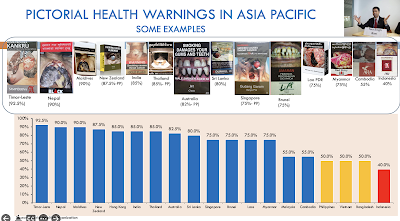
Writing is on the wall: Pictorial health warnings reduce tobacco use

[हिंदी] More evidence from scientific research is pouring in to show that graphic pictorial health warnings on all tobacco products are very effective in preventing children and youngsters from starting to consume tobacco, and in encouraging existing tobacco users to quit the lethal addiction. This is not only great news for public health and social justice, but is also another serious blow to the tobacco industry that is selling a product that kills one out of every two of its users as per the World Health Organization (WHO) - the United Nations health agency.

Game-changing HIV research offers hope for people with HIV and to end AIDS

Remarkable progress has been made in prevention and treatment of HIV infections since the first AIDS case was diagnosed nearly 41 years ago, thanks to the untiring efforts of scientists, medical professionals, affected communities and activists. Though there is still no cure for HIV yet, it is possible for people living with HIV to have a good quality and length of life if they get diagnosed early on, and receive full spectrum of treatment, care and support.

Pandemic is not over yet by a long shot: Deaths rose every week in 2022

Global health thought leader Dr Tim France rightly tweeted, “Here is the WHO stating explicitly what most people I know are saying to one another privately: Is not it really risky to lift all COVID-19 related measures now, with the virus still circulating in high levels? Clearly, in these global experts’ minds, the answer is an emphatic yes.”

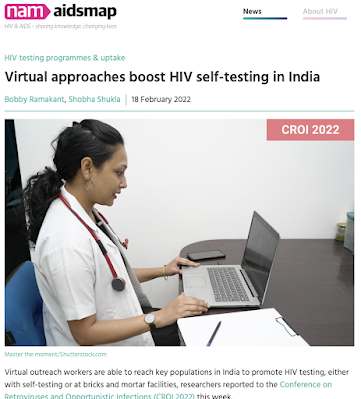
Virtual approaches boost HIV self-testing in India

published in NAM aidsmap, UK

Virtual outreach workers are able to reach key populations in India to promote HIV testing, either with self-testing or at bricks and mortar facilities, researchers reported to the Conference on Retroviruses and Opportunistic Infections (CROI 2022) this week.

Asia Pacific local leaders unite with renewed pledge to end viral hepatitis by 2030

Hepatitis-B is vaccine preventable, reliable tests and treatment is available for those infected, and hepatitis-C can be diagnosed, treated and even cure is a reality now. Then why 3 persons are dying every minute of hepatitis? Over 350 million people are living with hepatitis B and C virus globally. Asia Pacific region is home to more than half of world’s total number of people with Hepatitis B and C virus (about 200 million). That is why, local leaders of 79 cities in several countries of Asia Pacific region have united to power the agenda for stronger integrated action towards ending viral hepatitis as a public health threat by 2030 (a promise enshrined in the United Nations Sustainable Development Goals).

Gateway to fair elections: Will India do full count of verifiable paper record in elections?

Over 300 intellectuals and thought leaders from across world’s largest democracy - India - have written to the Election Commission demanding full count of Voter Verifiable Paper Audit Trail (VVPAT) slips.

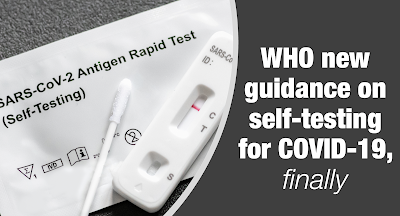
Will UN health agency give green light for using COVID-19 self-tests?

If we get infected with an infectious disease, will we not want to protect our family and others from it? But, unless we know our disease status timely and reliably, how can we help prevent further infection transmission? How will we link up, and benefit from, health and clinical care pathways until we know ourselves that we are infected? When self-tests for COVID-19 are available, there is no excuse not to make them affordable and accessible to everyone without any further delay, so that these easy to use tests can complement the confirmatory RT-PCR tests and other diagnostics for those who need them - and serve as an entry point for health and clinical care pathways.

Is Gandhi's Talisman the guiding light to end vaccine inequity?

In a world with over 7 billion people, more than 10 billion COVID-19 vaccine doses have been administered by the end of January 2022. But more than 3 billion people globally have not received even their first vaccine dose yet. Despite having enough of vaccine doses to protect the most at risk from COVID-19, we have failed to vaccinate equitably. Are some more equal than others? Mahatma Gandhi had rightly said that our world has enough for everyone's need but not for any one's greed.

Booster dose of COVID-19 vaccine: To give or not to give?

[हिंदी] With almost 19 million new COVID-19 cases reported, the third week of January 2022 recorded the highest-ever weekly number of new infections so far in the pandemic’s history. This was an increase of 20% more cases than the earlier 'highest-ever record' which was set in the previous week.

No excuse not to end the acute stage of pandemic globally

[हिंदी] Is it not shocking that after more than two years into the pandemic (when we know how to protect ourselves from getting infected, and have had vaccines for more than a year now), by far the highest-ever number of corona virus infections in a single week were reported in the second week of January 2022? This is an unacceptable failure to save lives and unnecessary human suffering.

Failing on the basics: Are we able to #BreakTheChain of infection transmission?

[हिंदी] The year 2022 began on a dismal note, with its first week reporting the highest-ever number of COVID-19 cases in a week globally. Since the pandemic began in December 2019, the reported number of people who contracted the virus has been over 306 million and 5.5 million people have died due to it worldwide. The actual numbers could be much higher, as many infections and deaths are likely to have gone underreported.

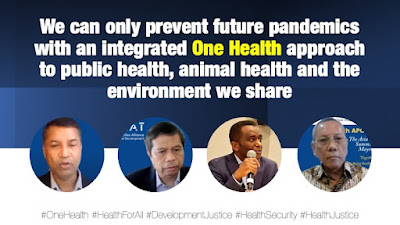
Is One Health approach the gateway towards pandemic preparedness?

[हिंदी] Covid pandemic is a grim reminder of what can go wrong when we do not work with an integrated “One Health” approach to human health, animal health, food system and climate. The critical link between these sectors, has only deepened over the years. But will our public health approach pass the litmus test of effective collaboration with other health and non-health sectors? Preventing future pandemics start with recognising links between human health, animal health, food system and climate, and ensuring our health response is socially just and ecologically sustainable.

Think twice: Can we deliver on #HealthForAll without saving lives from viral hepatitis?

[हिंदी] Despite over 350 million people living with hepatitis B and C virus globally, and 3 persons dying every minute, much-needed efforts are yet to be on-track to end viral hepatitis in next 108 months (by 2030) as promised by heads of all countries in UN General Assembly (by adopting the Sustainable Development Goals). More importantly, during the Covid pandemic, efforts to prevent and save lives from viral hepatitis had taken a backseat - which is risking losing the gains made earlier in addressing viral hepatitis across the world.

Capitalizing on the pandemic: Profiteering from human misery must be stopped

International Migrants Day 2021 
special article by
Panudda BoonpalaSarah KnibbsJulien Garsany
photo courtesy: ILO
Migrant workers have made huge changes to their lives and work to adapt to COVID-19. So too have the human traffickers that prey on them.

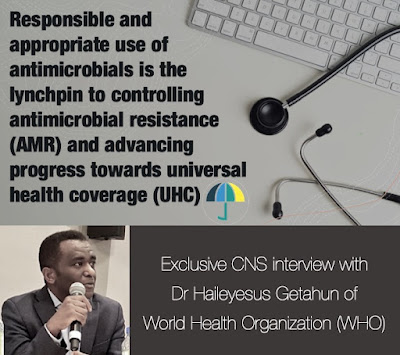
Stopping antimicrobial resistance is the bedrock for advancing universal health coverage

Universal Health Coverage (UHC) Day is 12 December

[हिंदी] Stopping antimicrobial resistance by promoting infection prevention, responsible and appropriate use of antimicrobial medicines in human health, livestock and food systems, is the bedrock for promoting universal health coverage. Failing this, the absence of efficacious antimicrobials will effectively return the world to the pre-antibiotic era before the 1920s when lives were lost at a far greater rate due to infection.

Leaders of cities in Asia Pacific commit for united local actions to meet global health goals

#EndTobacco is an essential part of the bedrock for Universal Health Coverage

[हिंदी] Can we deliver on the promise of health for all unless we fix the gaping and widening punctures that are causing epidemic-proportion of preventable diseases and untimely deaths? No one needs to suffer from preventable illnesses or die from curable diseases. Tobacco use kills over 8 million people worldwide every year. While ‘Big Tobacco’ industries become richer, it is the governments and the people worldwide who are not only dealing with mountainous health crises but also becoming more vulnerable to fritter away whatever progress they have been able to make towards the United Nations Sustainable Development Goals and targets.

Antimicrobial resistance is threatening global health security

When medicines become resistant, even curable diseases are at risk of becoming incurable

Antimicrobial resistance occurs when microbes such as bacteria, viruses, fungi, and parasites no longer respond to medicines. This makes common infections harder to treat and increases the risk of disease spread, severe illness and death. That is why India and other countries worldwide are observing 18-24 November as World Antimicrobial Awareness Week.

When people with HIV can live normal lives then why 680,000 AIDS deaths in 2020?

[हिंदी] When we know how to prevent HIV transmission, and how to keep every person living with HIV healthy, then how can one fathom deaths of at least 680,000 people due to AIDS-related illnesses in 2020 worldwide? And how can one explain, at least 1.5 million new HIV infections occurring globally in 2020?

Can we afford to lose effective drugs?

(published in The Bangkok Post, Thailand | 22 November 2021)

"Antimicrobial resistance is undermining a century of progress in medicine - infections that were previously treatable and curable with drugs, are becoming (or at risk of becoming) incurable" said  Thomas Joseph, head of World Health Organization (WHO)’s Antimicrobial Stewardship and Awareness.

What's the link? Food, human health, livestock, environment, and antimicrobial resistance

Medicines which aim to relieve pain and suffering, may cure us of diseases and avert untimely deaths, are at increasing risk of becoming ineffective against disease-causing microbes. Antimicrobial resistance occurs when microbes such as bacteria, viruses, fungi, and parasites no longer respond to medicines. This makes common infections harder to treat, more expensive to treat, more difficult to treat, and increases the risk of disease spread, severe illness and death.