
[CNS Rewind] Top 10 conferences covered by CNS in 2017

Accelerate momentum to #endTB as well as for progress on all #SDGs
Shobha Shukla, CNS (Citizen News Service)
As the year 2017 comes to a close, let us reflect back on the progress made in the fight against TB. One cannot ignore the epic meeting this year- the Global Ministerial Conference: Ending TB in sustainable development era - which brought together Russian President Vladimir Putin, WHO Director General Dr Tedros Adhanom, over 75 ministers of health as well as of other non-health disciplines (especially from high-burden TB countries), and other stakeholders and affected communities.
 |
| Dr Mario Raviglione in Moscow, Russia at the WHO Global Ministerial Conference to end TB in SDGs era |
[CNS Rewind] Top 10 #SustainableDevelopment interviews of 2017
 Looking back at the interviews with experts on a range of issues around sustainable development, featured in over 500 articles (English and Hindi articles, videos, podcasts) published by CNS Correspondents in Asian and African countries in 2017, we are compelled to say that each voice that was documented was invaluable and a 'must-heard' voice for discourses on sustainable development. We cannot overemphasize the importance of each of these spotlight interviews and critical issues they highlighted.
Dowry and domestic violence: Partners in crime
Shobha Shukla, CNS (Citizen News Service)
 Domestic violence and dowry harassment is still very rampant in India despite two very women favourable laws: The Dowry Prohibition Act, 1961, and Protection of Women from Domestic Violence Act, 2005. Weak legal institutions on inheritance place women in disadvantage, making them financially dependent upon their husbands and in-laws, who then make atrocious demands of dowry. This also makes a woman vulnerable to a range of exploitations.
 Domestic violence and dowry harassment is still very rampant in India despite two very women favourable laws: The Dowry Prohibition Act, 1961, and Protection of Women from Domestic Violence Act, 2005. Weak legal institutions on inheritance place women in disadvantage, making them financially dependent upon their husbands and in-laws, who then make atrocious demands of dowry. This also makes a woman vulnerable to a range of exploitations.
Climate change, unplanned urbanization and air pollution can fail us in beating NCDs
Shobha Shukla, CNS (Citizen News Service)
 Non-communicable diseases (NCDs), mostly cardiovascular diseases, cancers, diabetes, and lung diseases, account for over two-thirds of world's deaths each year. "Of these, the lung diseases are the least recognized" said Dr Dean Schraufnagel, Executive Director, Forum of International Respiratory Societies (FIRS), who was among the key experts at the 2nd Global NCD Alliance Forum in Sharjah, United Arab Emirates (UAE).

Are actions out-of-step to control the 'tsunami' of NCDs?
Shobha Shukla, CNS (Citizen News Service)
 The city of Sharjah is about to get an air-conditioned walkway to promote walking all the year round- during the 5 months of searing summer heat of United Arab Emirates (UAE), informed the Ruler of Sharjah at the Second Global NCD Alliance Forum 2017: "Stepping up the pace on NCDs: Making 2018 count". In 2015 Sharjah, was officially recognised as a WHO Healthy City, by meeting 88% of WHO Healthy City programme criteria. It abounds in public spaces for sports and physical activities too.

Process of taking back power is empowerment
Shobha Shukla, CNS (Citizen News Service)
 Rajmila Yadav (39 years) is currently living in her parents' house with her 14 years old daughter and 12 years old son. She hails from a Other Backward Class (OBC) in rural Azamgarh, Uttar Pradesh, India.
 Rajmila Yadav (39 years) is currently living in her parents' house with her 14 years old daughter and 12 years old son. She hails from a Other Backward Class (OBC) in rural Azamgarh, Uttar Pradesh, India.
No one has the right to dictate over a woman’s body
 |
| Dr Natalia Kanem |
Have we stepped up to take the TB-HIV duo head on?
Alice SagwidzaTembe, CNS Correspondent, Swaziland
 While the world took some time off to commemorate World AIDS Day on the first of December 2017, themed “Right to health” by the World Health Organization it is clear that the strong collaboration between tuberculosis (TB) bacteria and Human Immunodeficiency Virus (HIV), is still devastating human lives, and a strongly bonded human response to this deadly duo has not yet been fully-formed.
Putting communities at the forefront for an AIDS free world
Roger Paul Kamugasha, CNS Correspondent, Uganda
 The role of communities is essential in responding to the HIV/AIDS epidemic. Community advocacy, service delivery and participation in decision-making have shaped every aspect of the global AIDS response. While community responses, as well as community-based service delivery and advocacy, need to be reinforced, many community networks and civil society organizations (CSOs) are not receiving the support they need to engage fully.
[Call to register] Webinar: Will Universal Health Coverage accelerate progress to #endTB?
 [Watch webinar recording] [Listen or download the podcast] Governments have committed to achieve Universal Health Coverage (UHC) by 2030 by adopting the UN Sustainable Development Goals (SDGs). Also earlier this year in 2017, at the 70th World Health Assembly, governments and other partners, reinforced their promise to work together with renewed urgency to achieve UHC by 2030. UHC means everyone can access the quality health services they need without financial hardship.
Reality check: Is India on track to achieve the 90:90:90 HIV targets by 2020?
Shobha Shukla, CNS (Citizen News Service)
 Globally, there are an estimated 36.7 million people living with HIV (PLHIV), with over 1.8 million new infections and more than 1 million deaths in 2016. However, only 65% of these PLHIV are aware of their status and 53% (19.5 million) of all PLHIV are on treatment.
 Globally, there are an estimated 36.7 million people living with HIV (PLHIV), with over 1.8 million new infections and more than 1 million deaths in 2016. However, only 65% of these PLHIV are aware of their status and 53% (19.5 million) of all PLHIV are on treatment.
Out of step? Promise to end AIDS warrants stronger action!
 |
| Dr Ishwar Gilada, President, AIDS Society of India |
Women with disabilities: Are they nobody's children?
Swapna Majumdar, CNS Correspondent, India
Maria Cresta Anore cannot hear or speak. But her expressive eyes and animated fingers articulate her enthusiasm. Being at the 9th Asia Pacific Conference for Reproductive and Sexual health and Rights (APCRSHR) in Vietnam is a dream come true for her. It is not just the opportunity to engage with health and gender activists from the region that excites her. As a peer facilitator, Anore is keen to learn more about how to advocate for justice in sexual and reproductive health and rights, especially for women with disabilities back home in Philippines.
 |
| Maria Cresta Anore at APCRSHR |
Breaking the TB-diabetes nexus for a healthier India
Dr Sophia Thomas, CNS Correspondent, India
On the occasion of World Diabetes Day 2017 (November 14), Dr Soumya Swaminathan, WHO Deputy Director General and Director-General of Indian Council of Medical Research (ICMR), called for a standardised approach to tackle non-communicable diseases (NCDs) similar to the Indian government’s Revised National TB control programme (RNTCP). Interestingly, there is a synergistic linkage between the two diseases which share some common risk factors.
 |
| Source: World Diabetes Foundation |
Growing call to translate commitment to action for a TB-free world
Shobha Shukla, CNS (Citizen News Service)
 "... Nobody is immune to tuberculosis (TB), including those in the first world countries. More than 20% TB cases are linked to smoking globally. We are aware of our responsibilities and reducing deaths from TB, as well as from CVDs, is one of our country’s priorities. Only with coordinated and concerted action will we be able to defeat TB. I hope this meeting will boost the quality of life and healthcare globally..." so said Vladimir Putin, President of the Russian Federation at the World Health Organization (WHO)'s "Global Ministerial Conference: Ending TB in the sustainable development era: A multi-sectoral response" held in Moscow recently.
 "... Nobody is immune to tuberculosis (TB), including those in the first world countries. More than 20% TB cases are linked to smoking globally. We are aware of our responsibilities and reducing deaths from TB, as well as from CVDs, is one of our country’s priorities. Only with coordinated and concerted action will we be able to defeat TB. I hope this meeting will boost the quality of life and healthcare globally..." so said Vladimir Putin, President of the Russian Federation at the World Health Organization (WHO)'s "Global Ministerial Conference: Ending TB in the sustainable development era: A multi-sectoral response" held in Moscow recently.
When the going gets tough, the tough get going
Shobha Shukla, CNS (Citizen News Service)
 "I suffered for 10 long years. and then one fine day I decided I would not tolerate any more violence. I thought to myself that in a few years’ time my son would get married and will have kids. And I would continue getting thrashed in front of my daughter-in-law and grandchildren. No, I would not suffer anymore," so said Lila who comes from a Dalit community of Azamgarh, Uttar Pradesh, India.
 "I suffered for 10 long years. and then one fine day I decided I would not tolerate any more violence. I thought to myself that in a few years’ time my son would get married and will have kids. And I would continue getting thrashed in front of my daughter-in-law and grandchildren. No, I would not suffer anymore," so said Lila who comes from a Dalit community of Azamgarh, Uttar Pradesh, India.
[Call to register] Webinar: When HIV virus and TB bacteria can work together, why can't we?

Research is not a luxury but a necessity to end TB
Shobha Shukla, CNS (Citizen News Service)
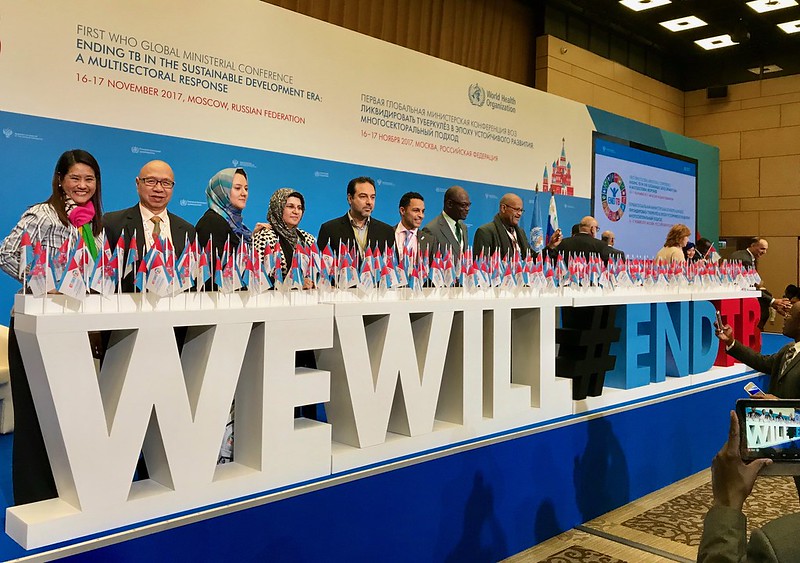 More than 1000 participants, including the President of Russian Federation Vladimir Putin, ministers from over 75 countries, donors, researchers, civil society representatives, and other stakeholders, had met at the first-ever "WHO Global Ministerial Conference on Ending TB in the Sustainable Development Era: A Multisectoral Response" which was held in Moscow on 16-17 November 2017, to forge stronger inter-sectoral partnerships for accelerating action to end TB.
World Diabetes Day 2017: A special focus on women
Dr Amitava Acharyya, CNS Correspondent, India
 Worldwide World Diabetes Day (WDD) is held on the 14th of November. The theme of this year’s World Diabetes Day campaign is ‘Women and diabetes - our right to a healthy future’. This theme is aimed at increasing awareness around diabetes in women at risk of or living with diabetes around the world.

Breaking the shackles of patriarchy
Shobha Shukla, CNS (Citizen News Service)
“Men always suppress women. It is for women to think that if they want to live their lives they have to be strong enough and step out of their homes. They should not be scared of ‘what society would say!’. If we are in the right, we do not have to be afraid of anyone. There is no shame in raising your voice against injustice, no matter what others say. Keep your spirits high.”

“Men always suppress women. It is for women to think that if they want to live their lives they have to be strong enough and step out of their homes. They should not be scared of ‘what society would say!’. If we are in the right, we do not have to be afraid of anyone. There is no shame in raising your voice against injustice, no matter what others say. Keep your spirits high.”
Latent TB deserves more attention
Dr Amitava Acharyya, CNS Correspondent, India
 Tuberculosis (TB) remains a major infectious disease globally. After initial contact with viable TB bacilli, hosts who fail to clear all Mycobacterium TB (M.TB) can progress to the status of latent TB infection (LTBI) and have a life-time risk of 5%–15% to further progress into active disease.
Tuberculosis (TB) remains a major infectious disease globally. After initial contact with viable TB bacilli, hosts who fail to clear all Mycobacterium TB (M.TB) can progress to the status of latent TB infection (LTBI) and have a life-time risk of 5%–15% to further progress into active disease.
Applied health research for making systems work for all is vital to #endTB
Shobha Shukla, CNS (Citizen News Service)
 [Watch video interview] [Listen/ download podcast] "Excellence in health means devoting your life to ending poverty" said physician and comedian Patch Adams many years ago, but these words have gained even more relevance in the current context and development paradigm.
 [Watch video interview] [Listen/ download podcast] "Excellence in health means devoting your life to ending poverty" said physician and comedian Patch Adams many years ago, but these words have gained even more relevance in the current context and development paradigm.
Time to manage diabetes and latent TB
Roger Paul Kamugasha, CNS Correspondent, Uganda
 Research has proved that people with diabetes are at high risk of developing active TB disease. This calls for global attention to focus on specific action in order to shift the paradigm of the escalating TB-diabetes burden. These actions should focus on earmarking resources for investment into research, advocacy communication and social mobilization.
Research has proved that people with diabetes are at high risk of developing active TB disease. This calls for global attention to focus on specific action in order to shift the paradigm of the escalating TB-diabetes burden. These actions should focus on earmarking resources for investment into research, advocacy communication and social mobilization.
Link between diabetes and TB
Dr P S Sarma, CNS Correspondent, India
 Diabetes Mellitus (DM) is one disease that can have an adverse affect on many organs of the body. Like wise, it has a great impact on all forms of TB—whether latent or active . People with DM have a high risk of getting TB, more so if they are having poor diabetes control. Diabetes prevalence is increasing especially is low income settings where TB is already endemic.
Subscribe to:
Posts (Atom)