 |
| Dr Madhukar Pai, Director, McGill Global Health Prog. CNS Image Library, 2013 |
No other way out: We need to early diagnose TB and treat with drugs that work

"She who does not tire, tires adversity": Savitri
 |
| Photo credit: Rahul D/CNS |
[CNS Images] Savitri, a mother of 6 children—5 daughters and 1 son—became a widow 12 years after her marriage, when her husband, the eldest of three brothers, died of electrocution. Narrating her tearful story, Savitri said that fate had been unkind to her from her early childhood. Her father died when she was a child. They were two sisters and one brother. Savitri had to discontinue her studies after Class 8, and had to stay home to do household chores as her mother would go out to work in the fields.
Time to walk the talk for accelerating towards TB-free India
 India's fight against tuberculosis (TB) has made remarkable progress despite which formidable challenges remain. With the launch of 'Call To Action For TB Free India' last week amidst strong commitment from India's Health Ministry and other partners in fight against TB, it is high time to start preparing and acting upon the promises made towards ending TB in India, and eventually, the world.
Mr Prime Minister, your words do not match your actions
 |
| Dr Sandeep Pandey, Vallabh bhai, and volunteers cleaning Ganga in Varanasi |
'Call to Action' launch catalyzes fight against TB
 |
| Image credit: CNS: citizen-news.org |
Watchdog group monitors delivery of HIV/AIDS services in Zimbabwe
Garikai Chaunza, CNS Correspondent, Zimbabwe
(First published in FSRN News, Zimbabwe)
In Zimbabwe, people living with HIV/AIDS have launched a programme to monitor the health care they receive in order to trace the gaps, shortcomings and loopholes in access and availability to services. Government records show that nearly one-tenth of Zimbabwe’s population of 13 million lives with the virus. Of these, only half receive regular treatment, according to the Ministry of Health and Child Care. Almost 1.3 million people in Zimbabwe are HIV-positive. Most receive treatment at government hospitals or local public clinics.
 |
| Photo Credit: CNS |
In Zimbabwe, people living with HIV/AIDS have launched a programme to monitor the health care they receive in order to trace the gaps, shortcomings and loopholes in access and availability to services. Government records show that nearly one-tenth of Zimbabwe’s population of 13 million lives with the virus. Of these, only half receive regular treatment, according to the Ministry of Health and Child Care. Almost 1.3 million people in Zimbabwe are HIV-positive. Most receive treatment at government hospitals or local public clinics.
Land Acquisition Bill takes away rights of farmers and pits them against 'Make in India'
Dr Rahul Pandey and Dr Sandeep Pandey, CNS Columnists
 Since the past several months we have seen the NDA government aggressively pushing through changes in land acquisition policy, first in the form of Ordinance in December 2014 and then, as it was passed as a Bill with nine changes in Lok Sabha but faced roadblock in Rajya Sabha, re-promulgating it before its expiry in April 2015. With the government calling the Bill pro-farmer and pro-development and most of opposition parties and social activists opposing it as anti-farmer, it is useful to sieve through the noise and look at the changes proposed and what existed earlier.
Since the past several months we have seen the NDA government aggressively pushing through changes in land acquisition policy, first in the form of Ordinance in December 2014 and then, as it was passed as a Bill with nine changes in Lok Sabha but faced roadblock in Rajya Sabha, re-promulgating it before its expiry in April 2015. With the government calling the Bill pro-farmer and pro-development and most of opposition parties and social activists opposing it as anti-farmer, it is useful to sieve through the noise and look at the changes proposed and what existed earlier.
"Hard work is the key to success": Kamlesh
Shobha Shukla, Citizen News Service - CNS
[CNS Images] 50 years old Kamlesh is the mother of 5 children—3 daughters and 2 sons. Her two daughters are already married and one of the sons has recently joined a job in Mumbai after doing his B.Tech. Kamlesh comes from a farmer’s family and was married into a similar one. Out of her 3 sisters and 2 brothers, one brother became a veterinary doctor — the others could not study due to poverty. But she was good at farming and also adept at stitching, knitting, embroidery, cooking and other household work. Yet all these womanly skills became the cause of many a discomfort after her marriage.
 |
| Photo credit: Rahul D/ CNS |
Why MPs might hold the last card in TB control
Diana Wangari, CNS Correspondent, Kenya
(First published in The Star News, Kenya)
When it comes to combating health epidemics and strengthening health systems in a country, the role of our elected leaders should not be underestimated. Think about the huge difference it would make if there were political will behind health initiatives. Every Member of Parliament would be working with their constituencies.
 |
| Photo credit: CNS: citizen-news.org |
When it comes to combating health epidemics and strengthening health systems in a country, the role of our elected leaders should not be underestimated. Think about the huge difference it would make if there were political will behind health initiatives. Every Member of Parliament would be working with their constituencies.
Call for applications: CNS Health Fellowship Programme 2015-2016 for health writers

Epilepsy: A disease of poverty in Nepal
Chhatra Karki, CNS Correspondent, Nepal
Epilepsy, a neurological problem, is present globally, but studies indicate that its presence is highly dense in developing countries. Experts opine that malnutrition is the major cause behind the wide spread of this disease. It is because of the malnutrition which affects inhibitory neurotransmitters and electrolytes that stimulate the brain activities. Senior Neurophysician Dr. Niranjan Acharya from the Department of Medicine, Civil Service Hospital, Kathmandu, Nepal elaborates that epilepsy is a chronic disorder which massively affects the personal, psychological and social dimensions of the patients.
 |
| Image credit: CNS: citizen-news.org |
Are we ready for a TB vaccine?
Diana Wangari, CNS Correspondent, Kenya
(First publish in the Star News, Kenya)
Do you remember receiving a TB vaccine? Or are you, like some of my friends, not quite sure about what I am referring to and require that I ask: "Do you have a mark on your upper left forearm?" A mark left after receiving the BCG Vaccine. Perhaps, I should start at the beginning. Recently, I attended a workshop organised by Aeras – a biotech organisation whose mission is to develop new TB vaccines.
 |
| Image credit: CNS: citizen-news.org |
Do you remember receiving a TB vaccine? Or are you, like some of my friends, not quite sure about what I am referring to and require that I ask: "Do you have a mark on your upper left forearm?" A mark left after receiving the BCG Vaccine. Perhaps, I should start at the beginning. Recently, I attended a workshop organised by Aeras – a biotech organisation whose mission is to develop new TB vaccines.
God helps those who help themselves: Kunta Devi
 |
| Photo credit: Rahul D/ CNS |
[CNS images] One day, more than 20 years ago, Kunta Devi’s husband never returned home from his workplace at a brick kiln and has been untraceable since then. He seemed to have vanished into thin air, leaving his wife alone with their 3 children—I daughter and 2 sons, with the youngest one barely 2 years old. Kunta does not know if he is dead or alive. She now lives with her 2 sons and their wives and 4 grandchildren—3 grandsons and 1 granddaughter.
World Health Day: No substitute to healthy mind
Shobha Shukla, Citizen News Service - CNS
We all aspire to be healthy and at times go to great lengths to ward off sickness. The fight against disease begins early on in life with responsible parents ensuring that their kids are administered all available vaccinations ((although there is a small lobby that is against this important preventive measure); as much as possible; they feed them nutritious diet (facing stiff competition from fast food chain offerings) and there is a growing consciousness about the benefits of physical exercise too (despite the allure of the idiot box and the computer).
 |
| Image credit: CNS: citizen-news.org |
Not temporarily but permanently firewall public health from industry interference

Illegal mining: A serious problem in India
GD Niveditha, CNS Correspondent
 Mining is a very old practice in India. India, as the country is very rich in natural resources, is a leading producer of iron ore and earns a good amount of foreign exchange in coal mining too. It also contributes about 2.2% - 2.5% towards the national GDP (gross domestic product) and these industries provides employment for more than 7,00,000 individuals. But, as it is known, every good thing has a bad side too. Mining in India has seen many scams and scandals such as the illegal mining or improper allocation of coal referred to as Coal-Gate in India. Thus, these not only spoil the reputation of India in buisness, but also leads to increase in social and environmental problems.
Taking Stock: Skewed priorities of the government's budget
 |
| Image credit: CNS: citizen-news.org |
Skewed Priorities of the government: Write-off in customs duty on gold, diamond and jewellery is about twice the cut in total budget for health, education, women and child development, drinking water and sanitation!
Tobacco control and human rights: Any linkages?
Shobha Shukla, Citizen News Service - CNS
Tobacco control actions need to underline that health is an important human rights issue and a willful denial of it by anyone—whether by the tobacco industry or by the tobacco consumers--is a breach of right to good health. The recently concluded 16th World Conference on Tobacco or Health (WCTOH 2015) stressed upon a human rights based approach to tobacco control at individual, community and country levels.
 |
| Image credit: CNS: citizen-news.org |
Call to put tobacco control under gender lens
Shobha Shukla, Citizen News Service - CNS
Tobacco kills 6 million of its one of the best users every year. So the tobacco industry needs to attract new customers to replace those who die or quit in order to keep their sales and profits up. And who could be a better target than the vulnerable group of women and children. Several symposia held during the recent 16th World Conference on Tobacco or Health (WCTOH 2015) in Abu Dhabi, focussed on the gender aspect of tobacco control. Speaker after speaker cited that the tobacco industry has been wooing women all around the world by implementing specific marketing campaigns targetted at women, especially in developing countries, with a view to feminize tobacco use. The magnitude of their impact is clearly visible.
 |
| Image credit: CNS: citizen-news.org |
Indian parliamentarian doubts if tobacco kills! Do not reinvent the wheel
 Indian parliamentarian who is chairing the committee which told the government not to implement stronger pictorial graphic health warnings on tobacco packs (and raise the warning size from 40% to 85%) from 1st April 2015, casted doubts whether tobacco causes cancer. India is at risk of reversing the gains made in saving lives from tobacco! He is the same parliamentarian who had raised similar questions in the parliament in 2011 and Ministry of Health and Family Welfare of the Government of India had given him detailed response underlining the alarming magnitude of the tobacco pandemic in the country.
Appeal to unite to form a pro-people political front

When the going gets tough, the tough get going: Islawati
 |
| Photo credit: Rahul D/ CNS |
Why is counseling important in TB treatment?
Dr Carolyn Kavita Tauro, CNS Correspondent, India
 Rohani (name changed) was one of those quieter female TB patients. But they almost all are, including the one who had committed suicide the previous night by jumping out of the hospital ward window. It is difficult, though not impossible, to comprehend what goes behind the calm exterior of patients like Rohani. Another TB patient, Archana (name changed), was just told that she would have to take her TB medications for a period of two years and that she would not be able to see her one-year old baby for at least a year.
TB in pregnant women

There were an estimated 3.3 million new cases of TB and an estimated 510 000 TB deaths among women in 2013, says the WHO Global TB Report 2014. While TB as a women’s health issue has been largely overlooked, it presents one of the major reasons that TB in women should be taken seriously. Gender inequality around the world makes women with TB particularly vulnerable to stigma. In addition, TB poses a variety of deep threats to women’s lives medically, economically, and socially.
Nepalese women with TB face unique challenges

TB victimized Pabitra Tamang (name changed), a resident of a village in Dhading, Jawang, in the hilly region of Nepal, ten years ago. After being diagnosed with TB, she was deprived of proper medical treatment due to destitution of her family. To fuel the fire, her family started to torture her mentally instead of arranging for necessary medical treatment. After knowing her TB status, her husband abandoned her to marry another woman. Eventually, she was thrown out from her home by her family.
Need for continued conversations on TB
Diana Wangari, CNS Correspondent, Kenya
(First published in The Star, Kenya)
 On March 24 we marked World TB Day and, as we have come to expect during such celebrations, TB was in the news: There was an article and news brief here and there in the newspapers; there was a mention of the acknowledgement of the day on the radio stations and a segment in the news in the TV stations. More so, there was perhaps, a breakfast meeting held somewhere and at a different location - multiple locations even – and so were events held to mark the World TB Day.
(First published in The Star, Kenya)
On March 24 we marked World TB Day and, as we have come to expect during such celebrations, TB was in the news: There was an article and news brief here and there in the newspapers; there was a mention of the acknowledgement of the day on the radio stations and a segment in the news in the TV stations. More so, there was perhaps, a breakfast meeting held somewhere and at a different location - multiple locations even – and so were events held to mark the World TB Day.
Vietnam's major regional thrust for a malaria-free Asia Pacific by 2030

Tuberculosis: A rocky road for women’s health
.JPG)
“TB needs to be taken seriously as a women’s health issue because it kills more than half a million women a year and makes more than 3 million women sick annually”. This is what Paula I Fujiwara, Scientific Director, and Riitta Dlodlo, Director, Department of Tuberculosis and HIV of the International Union Against Tuberculosis and Lung Disease (The Union), say in commemorating World TB Day 2015.
What's in a name? Tobacco in any form is deadly!
Shobha Shukla, Citizen News Service (CNS)
Just as a rose would smell as sweet if called by another name, so also tobacco would spell disease and death no matter in which guise it is consumed. Globalization is changing the face of smoking, especially among the youth, and they are turning to alternative forms of tobacco (often referred to as Alternative Tobacco Products or ATPs) like e-cigarettes, water pipes and now the midwakh, even as cigarette smoking subsides. Presenters at the 16th World Conference on Tobacco Or Health (WCTOH 2015),
held in Abu Dhabi, shared valuable information on the ill effects of
ATPs and their ever increasing popularity during the last decade
globally.
 |
| Photo credit CNS: citizen-news.org |
Nepal leading tobacco control in South Asia: Will it spiral domino effect on other nations?
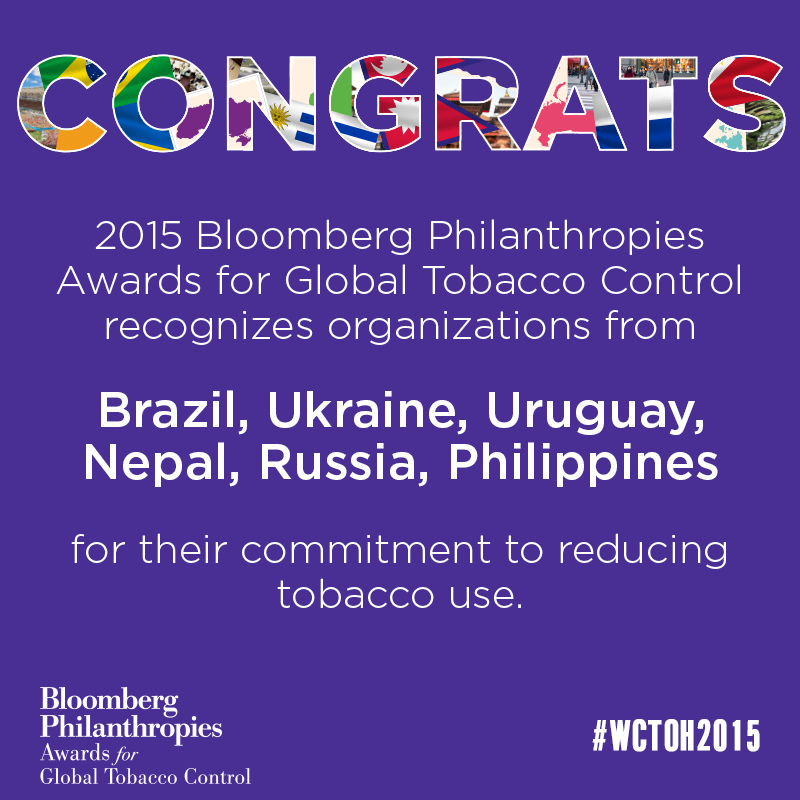 South Asian region has very high levels of tobacco use, and thus not surprisingly, rates of non-communicable diseases (NCDs) and other tobacco related illnesses also rage high. Nepal is in spotlight in the South Asian region by demonstrating high commitment to tobacco control and also acting on the ground! Recognizing Nepal's leadership, the country was awarded the prestigious 'Bloomberg Philanthropies Award for Global Tobacco Control' at the 16th World Conference on Tobacco or Health (WCTOH 2015).
Progress made but work remains on firewalling health policy from tobacco industry
Shobha Shukla, Citizen News Service (CNS)
Considerable progress has been made in different countries globally in protecting public health policy from tobacco industry interference, but certainly lot more work needs to be done. 2012 World Conference on Tobacco or Health (WCTOH) Declaration had called upon all governments to establish a national coordinating mechanism of the WHO Framework Convention on Tobacco Control (FCTC) which is fully firewalled from the tobacco industry. In 2012 we had envisioned that at least 50 governments should adopt comprehensive measures to prevent tobacco
industry interference in public health policies in line with FCTC
Article 5.3 guidelines.
 |
| Cloe Franko, NATT/ Corporate Accountability International |
Hold tobacco industry liable: Turn the cost-benefit ratio upside down
Shobha Shukla, Citizen News Service - CNS
Despite loads of credible and scientifically robust evidence that tobacco kills and is a common risk factor for major non-communicable diseases (NCDs), public health programmes have achieved limited success in controlling tobacco epidemic. With over 6 million tobacco-related deaths every year, the world is far from eliminating tobacco deaths. Every tobacco-related death is a tragedy, because it is preventable, had rightly said US Surgeon General Vivek Murthy at the opening of the 16th World Conference on Tobacco or Health (WCTOH 2015).
 |
| WCTOH session on FCTC Art.19: Neil Collishaw and Cloe Franko Photo credit: CNS: citizen-news.org |
Where there is a will there is a way: Teeja Devi
Shobha Shukla, Citizen News Service - CNS
[CNS image library] 55 years old Teeja Devi was born in village Bargadavaan in a family of farm labourers. The youngest of 4 siblings, her father died even before she was born. A father less Teeja had a tough childhood. She grew up amid fields, and from early childhood farming became part of her daily life. Teeja studied till class 5 and then was married in a rural household
of a nearby village. Teeja reminiscences--“I was too young when I got
married-- perhaps a child bride. I have no recollections of my marriage.
The only thing I remember is that I was brought in a bullock cart to my
in-laws house”.
 |
| Photo credit: Rahul D/ CNS |
Subscribe to:
Posts (Atom)