
Preparing the leaders of change for sanitation

Patients Overturn First Ever Product Patent On Medicine In India

A New Promising Tuberculosis Vaccine In The Offing!
With nearly nine million new cases and 1.5 million deaths per year, tuberculosis is a major global health threat, apart from entailing significant financial and economic burdens. The increase and spread of drug resistant TB makes the problem even more dangerous. The only currently available vaccine, BCG, offers limited protection and is not effective enough to stop the TB epidemic. New safer and more effective vaccines are therefore urgently needed.
When Will We Have A Surer Safer And Shorter Cure For MDR TB?

32 years old Payal Bhattacharya of Delhi, is a victim of not only an extremely rare genetic disorder known as Von Hippel-Lindau (VHL) syndrome since the tender age of three, but is also battling with extra pulmonary multiple drug resistant TB (MDR TB) of the bones for almost 3 years now. The VHL syndrome is associated with an abnormal capillary growth in blood-rich organs, (like the pancreas, heart and liver), constantly signalling a lack of oxygen in the blood and resulting in the formation of tumours in many organs which could be benign or malignant. Tumours have already been removed from her thyroid, liver, brain, legs, and forearm in several surgeries during the past 20 years. Lately her vision has started deteriorating and doctors suspect that she has some tumour in her eyes too.
Community Consultation: 2013 WHO Consolidated ARV Guidelines
Context
The global expansion of access to HIV treatment ranks
among the great recent achievements in public health. At the end of 2011, an
estimated 8 million people in low-and middle-income countries were receiving
ART – a 25-fold increase since 2002. Nevertheless, most low- and middle-income
countries are yet to achieve ‘Universal Access’ to ART. Reasons for this
include lack of awareness of HIV status, high cost of ART, late initiation of
ART, human rights issues affecting people living with HIV and key populations
and substantial attrition in the ‘test-treat-retain’ continuum. Addressing
structural barriers, reducing costs and strengthening the continuum of care is
critically important if the full gains of expanded HIV treatment are to be
realised.
Preventing an epidemic of drug-resistant tuberculosis in India

Former CIC criticizes Supreme Court judgement

[हिंदी]The just retired Central Information Commissioner Shailesh Gandhi is quite agitated about the recent Supreme Court judgement making it necessary for Chief Information Commissioners to have a judicial background and to conduct all hearings in benches consisting of two Commissioners one of whom will have to be a person from judicial background. He put up a spirited argument why a person of judicial background was not necessary for the Information Commission. The task merely involved either taking a decision of either allowing information to be given or not. Some judicial thinking may be required to consider the cases of exemption from the Act. But such cases are rare. In the 20,000 cases that he disposed of, he said, he just encountered two which required some legal interpretation.
TB and Diabetes Linkage Calls for An Integrated Response

Respect The Girl Child For Life, And Not Merely For A Day!

Link between TB and diabetes in Thailand
Duangkamol Donchaum who writes for CNS has produced an audio podcast on the link between tuberculosis (TB) and diabetes in Thailand and also an article in Thai language. To read the Thai language article, click here or to listen to Thai language podcast, click here
Government of India seeks YouTube videos on need for new TB drugs

Online consultation: Lessons from roll-out of MDR-TB services

GUIDING QUESTIONS
* Please share your experiences and perspectives of what works and what doesn’t work in your local settings where MDR-TB related services are available?
* What are the key lessons from this experience, that must be taken into account before scaling up the MDR-TB services any further for enhanced public health outcomes?
Top Tuberculosis Scientists Warn of Urgent Need to Develop Effective TB Vaccines
With cases of drug resistant tuberculosis (TB) on the rise globally, top TB researchers at a briefing today in London, called for greater focus on the quest for new vaccines—a crucial cost-effective method for addressing the growing threat. The WHO estimates that 9% cases of multidrug-resistant (MDR) TB in fact have extensively drug-resistant (XDR) TB for which even fewer drugs are effective, and a recent research published in The Lancet in August suggests that levels of drug-resistant TB are higher than previously appreciated and rates of XDR-TB range from 0.8-15.2% of MDR-TB cases at study sites across the world.
Health Programmes must collaboratively address TB–Diabetes

Save Human Lives And Not The Tobacco Industry
 |
| Tobacco industry's allied groups lobbied against global tobacco treaty provisions |
Beware: All Forms of Tobacco Are Harmful!

All Is Not Well With Our Minds

October, 2012--In Bhopal a 13 year old boy hangs himself to death after a minor squabble with his younger brother over watching a particular cartoon channel on TV. August, 2012-- A 13 year old son of a roadside stall owner in Nagpur commits suicide by hanging from the ceiling fan with his mother’s dupatta, after being scolded by her for neglecting his studies.
The Dangerous Communion of Tuberculosis and Diabetes

On a Toilet Trail
.jpg)
Mohan Das Karamchand Gandhi – affectionately and respectfully called Bapu or Mahatma - who played a key role in the Indian freedom struggle, had once said “Sanitation is more important than independence.” Paying tributes to Gandhiji on his 143rd birth anniversary, the Indian government has decided to take this message forward by starting a Nirmal Bharat Yatra (Clean India March). This
2000 kilo metres long Yatra is being launched on October 3 from Wardha
district in Maharashtra. In the next 56 days it proposes to cover five
states which, according to the 2011 census have the lowest sanitation
coverage in India, namely Maharashtra, Madhya Pradesh, Rajasthan, Uttar
Pradesh and lastly Bihar where it would culminate on November 19, which
is World Toilet Day.
MDR-TB, tobacco control, Lung diseases to be in focus at 2012 global meet
.jpg)
New Interventions To Treat Diabetic Foot Infections

In an exclusive interview given to Citizen News Service onsite at the Amrita Endocrinology, Diabetes and Diabetic Foot Conference (AEDFC 2012) held recently at the Amrita Institute of Medical Sciences (AIMS) in Kochi, two renowned and senior stalwarts of the institute’s Department of Endocrinology, Diabetic Lower Limb and Podiatric Surgery, Dr Harish Kumar and Dr Ajit Kumar Varma, shared some of the latest developments that have taken place at AIMS in the field of diabetic foot management.
Never Fall In Love With Technology...

ICPS Roll out in Uttar Pradesh Possible within the next three months?

The Integrated Child Protection Scheme (ICPS) is a much awaited initiative in Uttar Pradesh. And Rightly so with hopes of both, the government agencies as well as the private NGOs and activists pinned on the scheme for a better, safer and a more organized system of ushering in a protective environment for children in the state. Once implemented the ICPS is being touted as the ultimate accountability apparatus for care and protection as well as an effective juvenile justice system in the state.
No getting to zero new HIV infections in ASEAN without women

Charcot Foot In Diabetes: An Enigma

Comprehensive and integrated action must to control heart disease

World Heart Day is on 29th September
Cardiovascular diseases (CVDs) are the world's largest killers, claiming 17.3 million (1 crore 73 lakhs) lives a year. Risk factors for heart disease and stroke include raised blood pressure, cholesterol and glucose levels, smoking, inadequate intake of fruit and vegetables, overweight, obesity and physical inactivity. Heart disease and stroke can be prevented through healthy diet, regular physical activity and avoiding tobacco smoke. Individuals can reduce their risk of CVDs by engaging in regular physical activity, avoiding tobacco use and second-hand tobacco smoke, choosing a diet rich in fruit and vegetables and avoiding foods that are high in fat, sugar and salt, and maintaining a healthy body weight.
Look At Your Feet And Listen To Them
A three day Amrita Endocrinology, Diabetes and Diabetic Foot Conference (AEDFC 2012) was recently held in Kochi at the Amrita Institute of Medical Sciences (AIMS). It brought together clinicians, surgeons and researchers from across the country and the world to re energize the grey cells and deliberate upon various problems related to endocrinology and diabetes, with special emphasis on the management of diabetic foot infections, which could so often be life/limb threatening and yet are largely misunderstood and/or ignored by the public as well as medical fraternity.
Salvaging the foot in people with diabetes

Call for comprehensive and well-coordinated care for diabetic foot

Microbicides Set To Change The landscape Of HIV Prevention
The concept of microbicides as an HIV prevention tool was first proposed 20 years ago. Microbicide is a product applied topically in the vagina or rectum with the intention of preventing sexually transmitted infections (STIs) including HIV. It can take different forms such as a gel, foam or a ring. The idea to use the ARV-based tenovofir gel was mooted in 2003 but the proof of concept came only in 2010. The microbicide tenofovir gel was found safe and effective in reducing the risk of HIV in women who used it before and after vaginal sex in a study called CAPRISA 004. The CAPRISA 004 study demonstrated an overall 39% reduction in HIV infection, with 54% HIV reduction in women who used tenofovir gel consistently, providing proof of concept that microbicides indeed can prevent sexually transmitted HIV if used consistently.
An HIV vaccine will never work in isolation
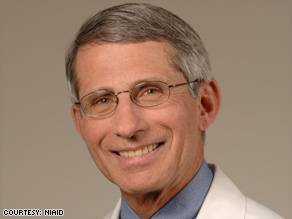 In the event that control and elimination of HIV is realised in the next few years, maintaining this success is going to be hard without a vaccine. That is how the Director of the US’ National Institutes of Allergy and Infectious Disease Dr Anthony Fauci analysed the situation at the AIDS Vaccine 2012 conference which ended Wednesday (Sept.12) in the American city of Boston. “If you want to have [HIV] control and maintenance of control, elimination and maintenance of elimination, in my mind the science and behaviour will tell me that it will virtually impossible to get to the point of true control and elimination without a vaccine,” said Dr Fauci in a keynote lecture.
Voluntary Medical Male Circumcision partially protects against HIV, HPV and Herpes

Modeling based on a timeline where 80 percent coverage of Voluntary Medical Male Circumcision (VMMC) of men age 15-49 is achieved by 2015 suggests that more than 20 percent of new HIV infections would be averted by 2025, with financial savings of an estimated USD 16.6 billion in future medical costs, said Cindra Feuer, Communications and Policy Advisor, AVAC - Global Advocacy for HIV Prevention at AIDS Vaccine 2012.
Subscribe to:
Posts (Atom)